Introduction
Artificial intelligence is rapidly transforming many industries, and education is no exception. Schools, colleges, universities, and online learning platforms are increasingly adopting AI-powered tools to improve learning experiences, enhance teaching efficiency, and provide personalized education.
As technology continues evolving, educators and students are discovering new ways to use AI for learning, assessment, content creation, and academic support. At the same time, concerns regarding privacy, ethics, and the future role of teachers continue to generate important discussions.
Understanding both the opportunities and challenges of AI in education is essential for students, parents, educators, and policymakers.
This guide explores how artificial intelligence is changing education and what the future may hold for learners around the world.
What Is Artificial Intelligence in Education?
Artificial intelligence in education refers to the use of computer systems that can perform tasks typically requiring human intelligence.
These systems can:
Analyze Data
Process large amounts of educational information.
Recognize Patterns
Identify learning behaviors and performance trends.
Make Recommendations
Suggest personalized learning resources.
Automate Tasks
Reduce repetitive administrative work.
AI technologies help create more efficient and adaptive educational environments.
Why AI Is Becoming Important in Education
Several factors are driving AI adoption in education.
Growing Demand for Personalized Learning
Students learn at different speeds and in different ways.
Increased Digital Learning
Online education continues expanding globally.
Administrative Efficiency
Schools seek ways to reduce routine workloads.
Improved Data Analysis
Educational institutions can make more informed decisions.
AI offers solutions to many challenges faced by modern education systems.
Personalized Learning Experiences
One of the most significant benefits of AI is personalized learning.
Individual Learning Paths
Students receive content tailored to their needs.
Adaptive Learning Systems
Platforms adjust difficulty levels based on performance.
Customized Recommendations
AI suggests lessons, exercises, and study materials.
Real-Time Feedback
Students receive immediate guidance and support.
Personalized learning can help improve engagement and academic outcomes.
Intelligent Tutoring Systems
AI-powered tutoring tools are becoming increasingly common.
On-Demand Assistance
Students can receive help whenever needed.
Subject-Specific Support
Tutoring systems can focus on particular topics.
Practice Opportunities
Students gain access to additional exercises and resources.
Progress Monitoring
AI tracks performance and identifies learning gaps.
These systems help supplement traditional teaching methods.
Automated Grading and Assessment
Assessment is another area where AI is creating efficiencies.
Faster Evaluation
Assignments can be reviewed more quickly.
Consistent Scoring
Automated systems apply standardized criteria.
Immediate Results
Students receive feedback without long delays.
Reduced Administrative Burden
Teachers spend less time on repetitive grading tasks.
This allows educators to focus more on instruction and student engagement.
Supporting Teachers and Educators
AI is designed to assist teachers rather than replace them.
Lesson Planning Assistance
AI tools help generate ideas and resources.
Data Analysis
Educators gain insights into student performance.
Administrative Automation
Routine tasks can be streamlined.
Student Monitoring
Teachers can identify struggling students earlier.
AI helps educators make more informed decisions and improve learning outcomes.
Enhancing Online Learning
Online education has grown significantly in recent years.
Personalized Course Recommendations
Students receive relevant learning opportunities.
Interactive Learning Environments
Technology creates engaging educational experiences.
Flexible Learning Schedules
Students can learn at their own pace.
Global Access
Education becomes more accessible regardless of location.
AI is helping improve the quality and effectiveness of online learning platforms.
AI and Accessibility in Education
Artificial intelligence can improve educational accessibility.
Language Translation
Students can access content in different languages.
Speech Recognition
Supports learners with various needs.
Text-to-Speech Technology
Assists individuals with reading challenges.
Adaptive Interfaces
Learning environments adjust to user requirements.
These innovations help create more inclusive educational experiences.
Data-Driven Educational Decisions
Educational institutions increasingly rely on data.
Student Performance Analysis
Schools can identify trends and challenges.
Curriculum Optimization
Programs can be improved based on results.
Resource Allocation
Institutions make better use of available resources.
Early Intervention
At-risk students can receive support sooner.
Data-driven approaches support better educational outcomes.
Challenges of AI in Education
Despite many advantages, AI adoption presents challenges.
Privacy Concerns
Educational systems collect significant amounts of student data.
Data Security
Protecting sensitive information remains essential.
Algorithm Bias
AI systems may reflect biases present in training data.
Technology Dependence
Overreliance on technology could create limitations.
Educational institutions must address these concerns carefully.
For additional insights, read How to Protect Your Privacy Online.
Ethical Considerations
AI raises important ethical questions.
Fairness
All students should have equal opportunities.
Transparency
Educational systems should explain how AI decisions are made.
Accountability
Institutions remain responsible for educational outcomes.
Human Oversight
Teachers should continue guiding educational processes.
Ethical frameworks help ensure responsible AI implementation.
AI and Academic Integrity
Artificial intelligence is changing how students complete assignments.
Research Assistance
Students can gather information more efficiently.
Writing Support
AI tools may assist with drafting and editing.
Academic Honesty Concerns
Institutions must establish clear usage guidelines.
Critical Thinking Importance
Students should continue developing independent problem-solving skills.
Balancing innovation with academic integrity is essential.
The Future Role of Teachers
Many experts believe teachers will remain central to education.
Human Interaction
Teachers provide emotional support and mentorship.
Classroom Leadership
Educators manage learning environments effectively.
Critical Thinking Development
Human guidance remains essential for complex learning.
Personalized Support
Teachers understand individual student needs beyond data.
AI is more likely to enhance teaching rather than replace educators.
Artificial Intelligence and Lifelong Learning
Learning no longer ends with formal education.
Professional Development
Workers continuously update skills.
Career Transitions
AI supports personalized learning pathways.
Skill Recommendations
Technology identifies valuable learning opportunities.
Flexible Education Models
Learning becomes more accessible throughout life.
AI is expected to play a major role in lifelong education.
Future Trends in AI Education
Several trends are expected to shape the future.
Advanced Personalization
Learning experiences will become increasingly customized.
Virtual Learning Assistants
Students may receive more sophisticated support systems.
Predictive Analytics
Educational institutions will better anticipate student needs.
Immersive Learning Technologies
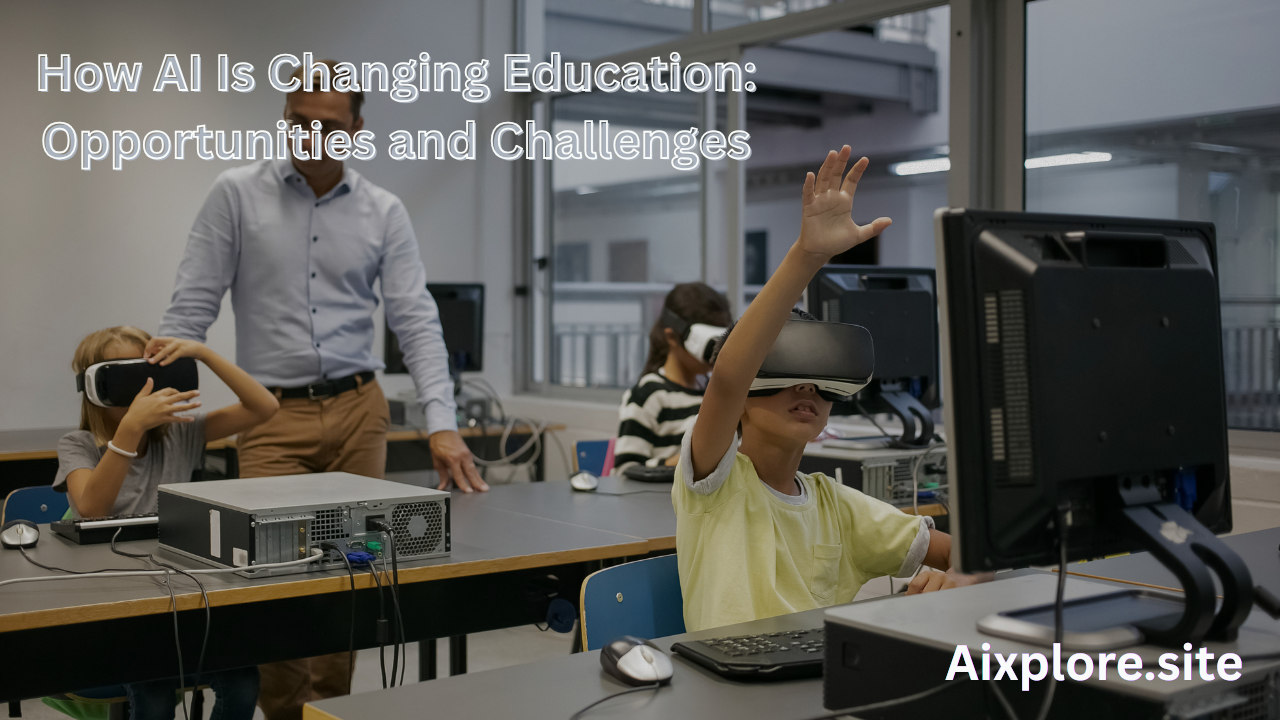
AI may integrate with virtual and augmented reality environments.
Smarter Educational Platforms
Learning systems will continue becoming more adaptive and intelligent.
These innovations have the potential to transform education globally.
Frequently Asked Questions
How is AI used in education?
AI is used for personalized learning, tutoring, grading, analytics, accessibility tools, and administrative support.
Can AI replace teachers?
Most experts believe AI will assist teachers rather than replace them because human interaction remains critical to education.
What are the benefits of AI in education?
Benefits include personalized learning, faster feedback, improved accessibility, and administrative efficiency.
What challenges does AI create for education?
Privacy concerns, data security, algorithm bias, ethical considerations, and academic integrity issues are among the main challenges.
Conclusion
Artificial intelligence is reshaping education by creating more personalized, accessible, and efficient learning experiences. From intelligent tutoring systems and automated assessments to advanced analytics and accessibility tools, AI offers significant opportunities for students and educators alike.
However, successful implementation requires careful attention to privacy, ethics, security, and the continuing importance of human guidance. As educational technologies continue evolving, the most effective approaches will likely combine the strengths of artificial intelligence with the expertise, empathy, and leadership of educators.
The future of education is not simply about technology—it is about using technology wisely to help learners achieve their full potential.