Introduction
Healthcare has always relied on innovation to improve patient outcomes and save lives. In recent years, one technology has stood out as a major force of change: artificial intelligence (AI).
From disease detection and medical imaging to drug development and personalized treatment plans, AI is helping healthcare providers deliver faster, more accurate, and more efficient care. While doctors, nurses, and healthcare professionals remain at the center of patient care, AI is becoming a powerful tool that supports better decision-making and improves operational efficiency.
As healthcare systems face growing patient demands, rising costs, and increasing amounts of medical data, artificial intelligence is helping organizations overcome these challenges and improve the quality of care.
What Is Artificial Intelligence in Healthcare?
Artificial intelligence in healthcare refers to the use of advanced computer systems that can analyze data, recognize patterns, make predictions, and assist healthcare professionals in making informed decisions.
AI technologies can process large volumes of information much faster than humans, helping identify trends and insights that might otherwise go unnoticed.
Key Technologies Behind Healthcare AI
Machine Learning
Machine learning enables systems to learn from medical data and improve performance over time.
Natural Language Processing
Natural language processing helps computers understand and analyze medical records, clinical notes, and healthcare documents.
Computer Vision
Computer vision allows AI systems to analyze medical images such as X-rays, CT scans, and MRIs.
To understand the technology behind these systems, read our guide on What Is Machine Learning and How Does It Work?
Why Healthcare Needs Artificial Intelligence
Healthcare organizations generate enormous amounts of information every day.
Growing Medical Data
Patient records, imaging results, laboratory reports, and treatment histories create large datasets.
Increasing Demand for Healthcare Services
Aging populations and chronic diseases continue to increase healthcare demands.
Need for Faster Diagnosis
Early diagnosis often improves treatment outcomes and reduces healthcare costs.
Operational Challenges
Hospitals and clinics must manage resources efficiently while maintaining high-quality care.
Artificial intelligence helps address these challenges by improving speed, accuracy, and efficiency.
AI in Medical Diagnostics
One of the most significant applications of AI is disease diagnosis.
Early Disease Detection
AI systems can identify warning signs before symptoms become severe.
Cancer Detection
Advanced algorithms can analyze medical scans and detect abnormalities that may indicate cancer.
Heart Disease Prediction
AI can assess risk factors and identify patients who may require preventive care.
Neurological Disorders
Researchers are using AI to assist in detecting conditions such as Alzheimer’s disease and Parkinson’s disease.
Improved Accuracy
AI tools can reduce diagnostic errors by providing healthcare professionals with additional insights.
Faster Results
Medical imaging analysis that once required hours can often be completed within minutes.
AI-Powered Medical Imaging
Medical imaging plays a critical role in healthcare.
X-Ray Analysis
AI systems can identify fractures, infections, and abnormalities.
MRI Interpretation
Advanced algorithms help radiologists analyze complex scans more efficiently.
CT Scan Evaluation
AI improves the speed and consistency of image interpretation.
Ultrasound Support
Healthcare professionals can use AI-assisted imaging tools to improve diagnostic accuracy.
These advancements allow specialists to focus more on patient care and less on repetitive analysis tasks.
Personalized Medicine and Treatment
Every patient is unique.
Artificial intelligence helps create treatment plans tailored to individual needs.
Patient-Specific Analysis
AI evaluates factors such as:
Medical History
Previous conditions and treatments.
Genetic Information
Genetic data can influence treatment decisions.
Lifestyle Factors
Diet, exercise, and environmental influences may affect outcomes.
Customized Treatment Plans
Personalized recommendations can improve effectiveness and reduce side effects.
AI in Drug Discovery
Developing new medications traditionally requires years of research and significant investment.
Faster Research
AI can analyze massive datasets to identify promising drug candidates.
Reduced Development Costs
Researchers can focus resources on the most promising options.
Improved Success Rates
AI helps identify potential issues earlier in the development process.
Accelerated Clinical Trials
Patient selection and data analysis become more efficient.
This innovation could significantly reduce the time required to bring life-saving treatments to market.
Virtual Health Assistants
AI-powered assistants are becoming increasingly common.
Appointment Scheduling
Patients can book appointments quickly and efficiently.
Medication Reminders
Automated reminders help improve treatment adherence.
Health Monitoring
Virtual assistants can track symptoms and provide recommendations.
Basic Health Guidance
Patients can receive answers to common healthcare questions.
These tools improve accessibility while reducing administrative workloads.
AI and Remote Patient Monitoring
Remote healthcare continues to grow worldwide.
Wearable Devices
Smart devices can monitor health indicators in real time.
Heart Rate Monitoring
Continuous tracking provides valuable health insights.
Sleep Analysis
AI helps identify sleep-related issues.
Activity Tracking
Physical activity data supports preventive healthcare.
Chronic Disease Management
Patients with long-term conditions can receive ongoing monitoring without frequent hospital visits.
Improving Hospital Efficiency
Healthcare organizations must balance patient care with operational demands.
Resource Management
AI helps hospitals allocate staff and equipment more effectively.
Workflow Optimization
Administrative tasks can be automated.
Predictive Analytics
Healthcare providers can anticipate patient demand and plan resources accordingly.
Reduced Waiting Times
Improved scheduling systems help streamline patient flow.
Benefits of Artificial Intelligence in Healthcare
AI offers numerous advantages for healthcare systems.
Better Patient Outcomes
Earlier detection and personalized treatments improve results.
Increased Efficiency
Healthcare professionals spend less time on repetitive tasks.
Enhanced Accuracy
AI reduces the likelihood of human error in certain processes.
Lower Costs
Improved efficiency can reduce overall healthcare expenses.
Challenges and Ethical Considerations
Despite its benefits, AI adoption presents challenges.
Data Privacy
Healthcare organizations must protect sensitive patient information.
Security Risks
Medical systems can become targets for cyberattacks.
For more information on protecting digital information, read Cybersecurity Tips for Beginners in 2026.
Algorithm Bias
Poor-quality training data may lead to inaccurate outcomes.
Regulatory Compliance
Healthcare providers must follow strict legal and ethical standards.
Responsible implementation remains essential.
The Future of AI in Healthcare
Artificial intelligence is expected to play an even greater role in the coming years.
Advanced Diagnostics
AI systems will continue improving disease detection capabilities.
Predictive Healthcare
Providers will identify health risks earlier and take preventive action.
Robotic Assistance
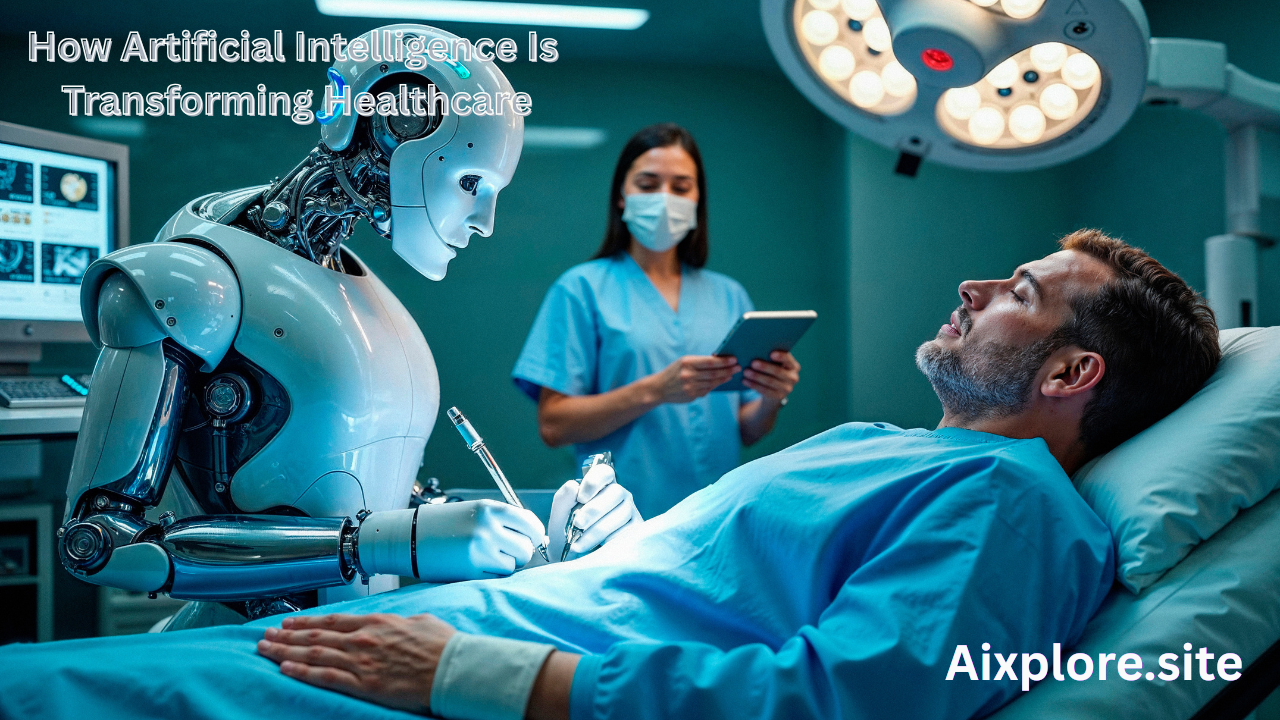
AI-powered robotics may support surgeries and patient care.
Global Healthcare Access
Technology can help deliver healthcare services to underserved communities.
These developments could improve healthcare accessibility and outcomes worldwide.
Frequently Asked Questions
Can AI replace doctors?
No. AI is designed to assist healthcare professionals, not replace them. Human expertise, judgment, and patient interaction remain essential.
Is AI used in hospitals today?
Yes. Many hospitals use AI for diagnostics, imaging analysis, scheduling, and patient monitoring.
How does AI improve diagnosis?
AI analyzes medical data and identifies patterns that may help healthcare professionals detect diseases earlier and more accurately.
What are the risks of AI in healthcare?
Potential risks include privacy concerns, data security issues, algorithm bias, and regulatory challenges.
Conclusion
Artificial intelligence is transforming healthcare by improving diagnostics, enhancing patient care, accelerating medical research, and increasing operational efficiency. As healthcare systems continue adopting advanced technologies, AI will play a critical role in addressing some of the industry’s biggest challenges.
While ethical and security concerns must be carefully managed, the potential benefits of AI are significant. Organizations that successfully combine human expertise with intelligent technologies will be better positioned to deliver safer, faster, and more personalized healthcare services in the future.
For further reading, explore our articles on The Future of Artificial Intelligence in Everyday Life, What Is Machine Learning and How Does It Work?, and How Cloud Computing Is Changing Modern Businesses.